What happens when we die? The body, the brain and the unanswered question
Researchers can track circulation, record electrical signals and interview survivors. Connecting those observations to someone’s final experience is much harder.

A stopped heart does not necessarily mean a life is over. Chest compressions can keep blood moving while clinicians try to restore effective circulation. That possibility is the reason resuscitation exists. It is also where much of the confusion about death begins. American Heart Association.
Someone who survives cardiac arrest can describe what they remember. A monitor can record what their brain was doing during treatment. Neither observation, by itself, tells us what happens to consciousness after death becomes permanent.
To answer “What happens when we die?” we have to keep several questions separate: what happens to the body, what the brain does as it fails, and what a person experiences.
The body does not follow one timetable
Dying can be sudden or gradual. During an expected death, a person may become less responsive, stop interacting and develop irregular breathing. But there is no single sequence that every family will witness. Some people remain mentally clear while their bodies weaken; others lose cognitive function earlier. UCLA Health, National Institute on Aging.
Inside the brain, an energy crisis can develop. Nerve cells expend energy maintaining different concentrations of electrically charged particles across their membranes. Those differences help make signaling possible. When the energy supply fails, normal signaling can fall silent before those gradients collapse.
Researchers captured that distinction in nine severely brain-injured patients studied after life-sustaining treatment was withdrawn. Their 2018 paper described electrical silence followed, in most patients, by a spreading wave of depolarization: a breakdown of the cells’ electrical balance. The wave's onset was not itself a universal point beyond which recovery was impossible. Dreier and colleagues.
Even circulation has more than one clock. A 2025 human physiology study found that measured brain blood-flow signals disappeared before the heart's electrical activity ended. The findings came from closely monitored dying patients, not a universal countdown applicable to every cardiac arrest. Nature Medicine study.

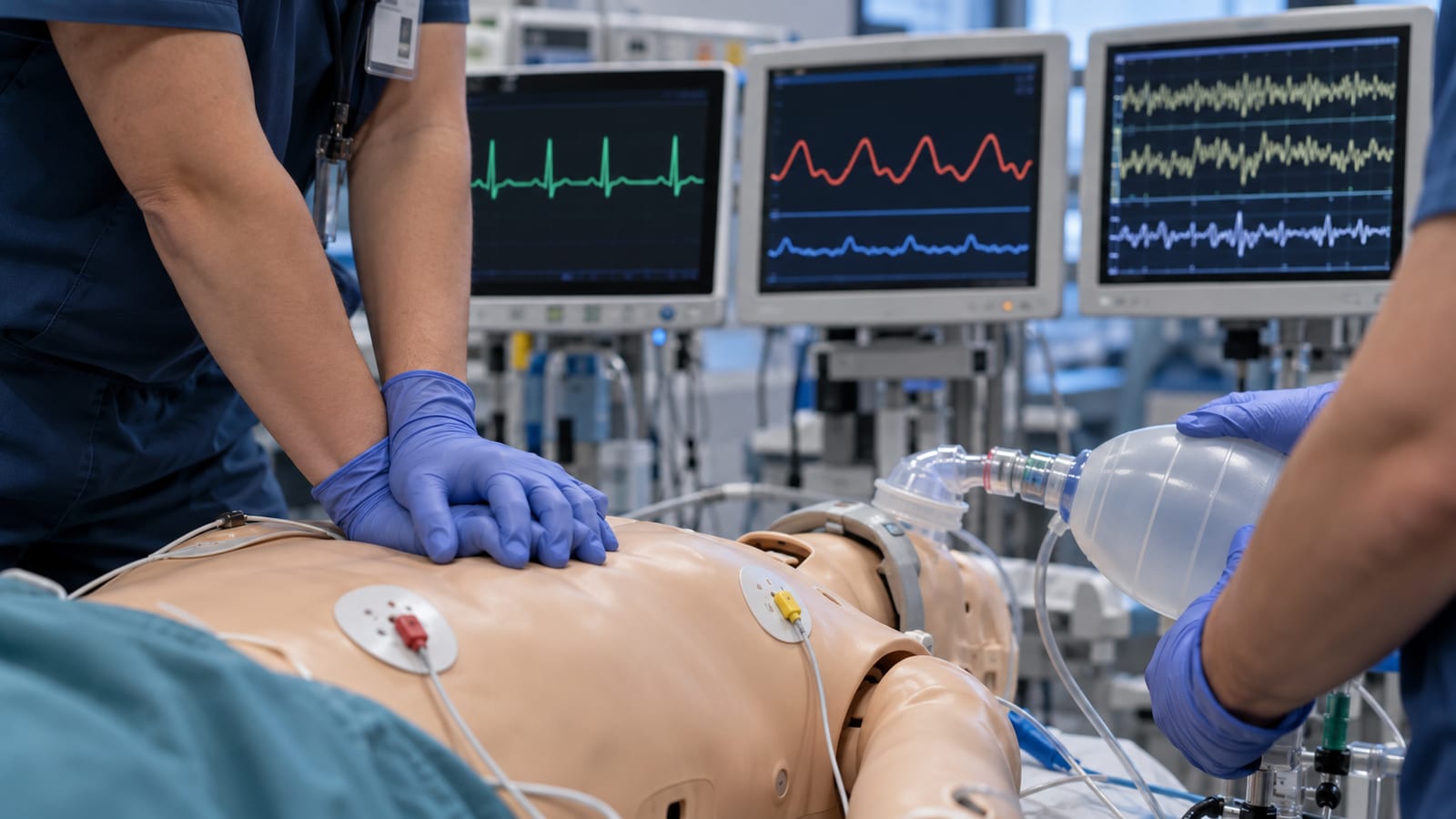
Brain death is a separate clinical determination. The 2023 US consensus guideline describes permanent loss of function of the brain as a whole, including the brainstem. Assessment requires a known catastrophic injury, appropriate testing and exclusion of conditions that could confound the examination, such as relevant drug effects or hypothermia. A person being unresponsive, or having a stopped heart, is not enough to establish it. Consensus guideline.
What survivors remember
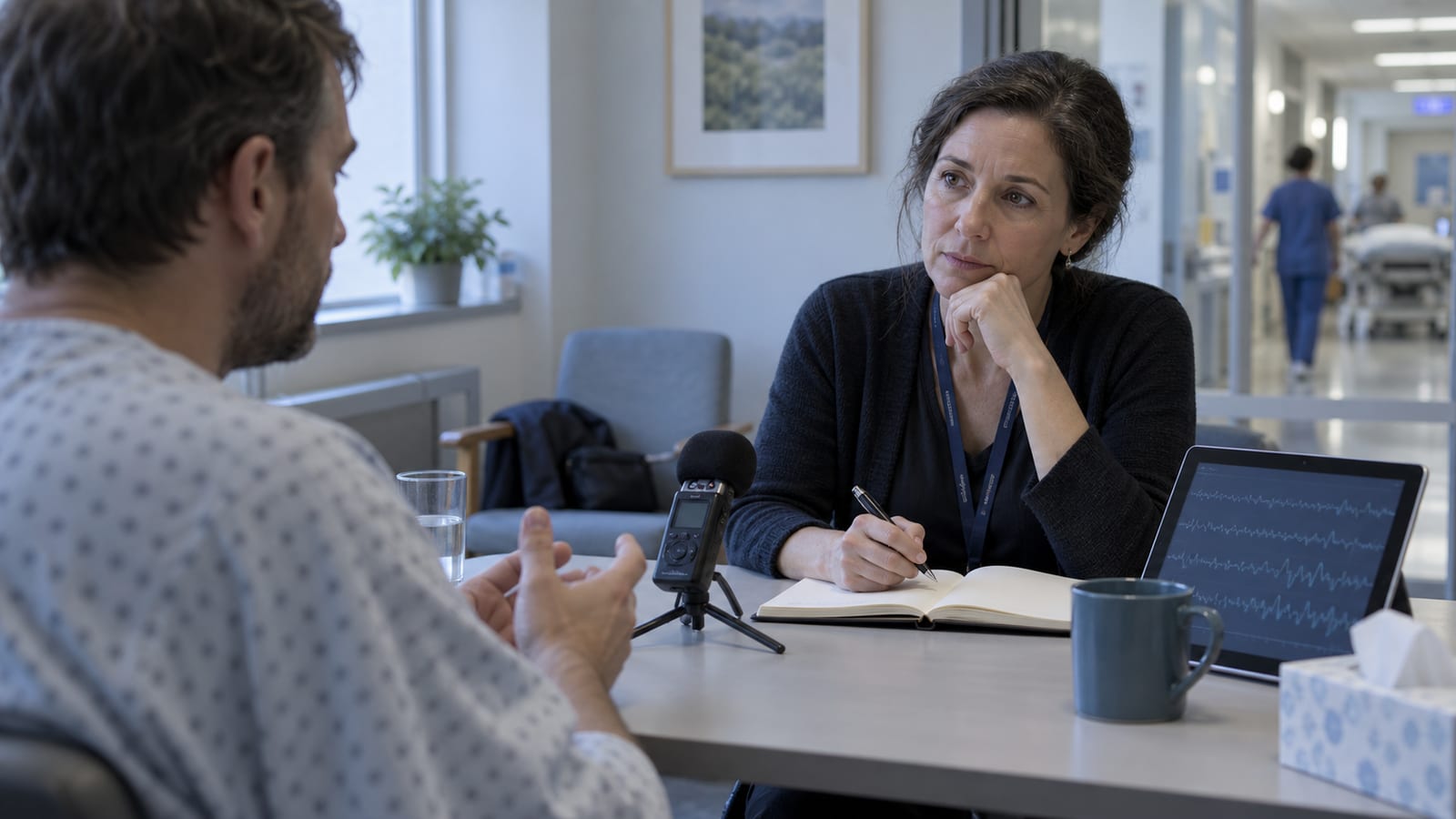
Reports of near-death experiences are a legitimate subject of research. They can include a sense of leaving the body, moving through a tunnel, encountering deceased people or reviewing one's life. In a Dutch prospective study published in 2001, 62 of 344 resuscitated patients reported an experience classified as an NDE. These were accounts from survivors, not observations made beyond permanent death. The Lancet study.
The 2023 AWARE II study followed 567 hospital cardiac arrests. Of 53 survivors, 28 completed interviews; six described experiences classified as transcendent. Nobody identified the study's visual target, while one person identified an auditory stimulus. Those findings, from a small surviving and interviewed subset, do not establish perception outside the body. AWARE II.
The timing problem is especially difficult. A memory described after recovery does not automatically identify when the experience occurred. Researchers must distinguish the period of collapse, ongoing resuscitation and recovery, and cannot simply assign a remembered event to the moment that makes the most striking story.
Brain recordings offer another kind of evidence. In a 2023 study, two of four comatose patients showed increased gamma activity after ventilatory support was withdrawn. Gamma describes fast electrical oscillations. None of the patients survived to report an experience, and the authors acknowledged that the activity might be pathological or unrelated to conscious experience. A recording like this cannot establish that someone's life was flashing before their eyes. PNAS study.
A more detailed analysis from the AWARE II program, published in 2026, found interpretable EEG recordings in 53 of 85 arrests. Some rhythms appeared as late as 60 minutes into CPR. That last qualification matters: CPR was being performed. The finding concerns brain activity during efforts to sustain circulation, not an hour of demonstrated consciousness without blood flow. Huppert and colleagues.
Another 2026 study scanned 15 people as they recalled near-death experiences. It found activity in networks associated with autobiographical memory. But the participants had normal brain perfusion during scanning. By design, the experiment studied remembering an event; it could not determine when the original experience occurred or verify its contents. Preliminary fMRI study.

An explanation is still being tested
One proposed explanation, published in 2025, brings together oxygen-related changes, altered chemical signaling, brain-network activity and psychological responses to extreme threat. Called NEPTUNE, it attempts to explain how these processes could produce the features of near-death experiences. Its authors explicitly describe it as theoretical and requiring empirical testing. Nature Reviews Neurology review.
Other researchers challenged the model, arguing that it inadequately explains important features of the reports and risks turning associations into causes. The authors defended it as a plausible framework. That exchange is a useful reminder that a detailed biological proposal is not the same as a demonstrated explanation. Criticism, reply.
The opposite leap also fails: an incomplete explanation does not establish that consciousness has left the brain. The evidence discussed here does not demonstrate personal awareness continuing after permanent brain death. Whether someone interprets death through faith or philosophy is a different question from what these experiments establish.
The physical aftermath is more accessible. Blood settles under gravity, and muscles develop the stiffness called rigor mortis. Decomposition involves communities of organisms, including bacteria and fungi, breaking down the body's tissues. These processes have their own timing and environmental influences. NHS England, human decomposition research.
For someone sitting beside a dying person, another question may feel more urgent than any theory of consciousness: are they comfortable? End-of-life care addresses physical discomfort, emotional distress and spiritual needs. No account of a peaceful near-death experience can promise that everyone will experience dying the same way. National Institute on Aging.
A better understanding will require something unusually difficult: reliable measurements of a brain in crisis, followed by a survivor able to describe an experience that can be connected to those measurements. Until then, an electrical trace and a remembered journey remain two pieces of evidence whose relationship researchers are still trying to establish.
Sources / further reading
- American Heart Association: What is cardiac arrest?
- UCLA Health: Coping With Loss
- National Institute on Aging: Providing Care and Comfort at the End of Life
- Dreier et al., 2018
- Bird et al., 2025
- 2023 brain-death consensus guideline
- Van Lommel et al., 2001
- Parnia et al., AWARE II, 2023
- Xu et al., 2023
- Huppert et al., 2026
- Alonso Ruiz et al., 2026
- Martial et al., NEPTUNE review, 2025
- O’Grady and Varghese, 2025
- Martial et al., response, 2025
- NHS England: postmortem physical signs
- Burcham et al., 2024
Keep exploring


