Could the Motorcycle of the Future Drive Itself and Balance on Its Own?
Autonomous cars are already here in early form. Motorcycles are a much harder problem. But self-balancing systems, rider-assistance technology and electric drivetrains could eventually make a new kind of machine possible.
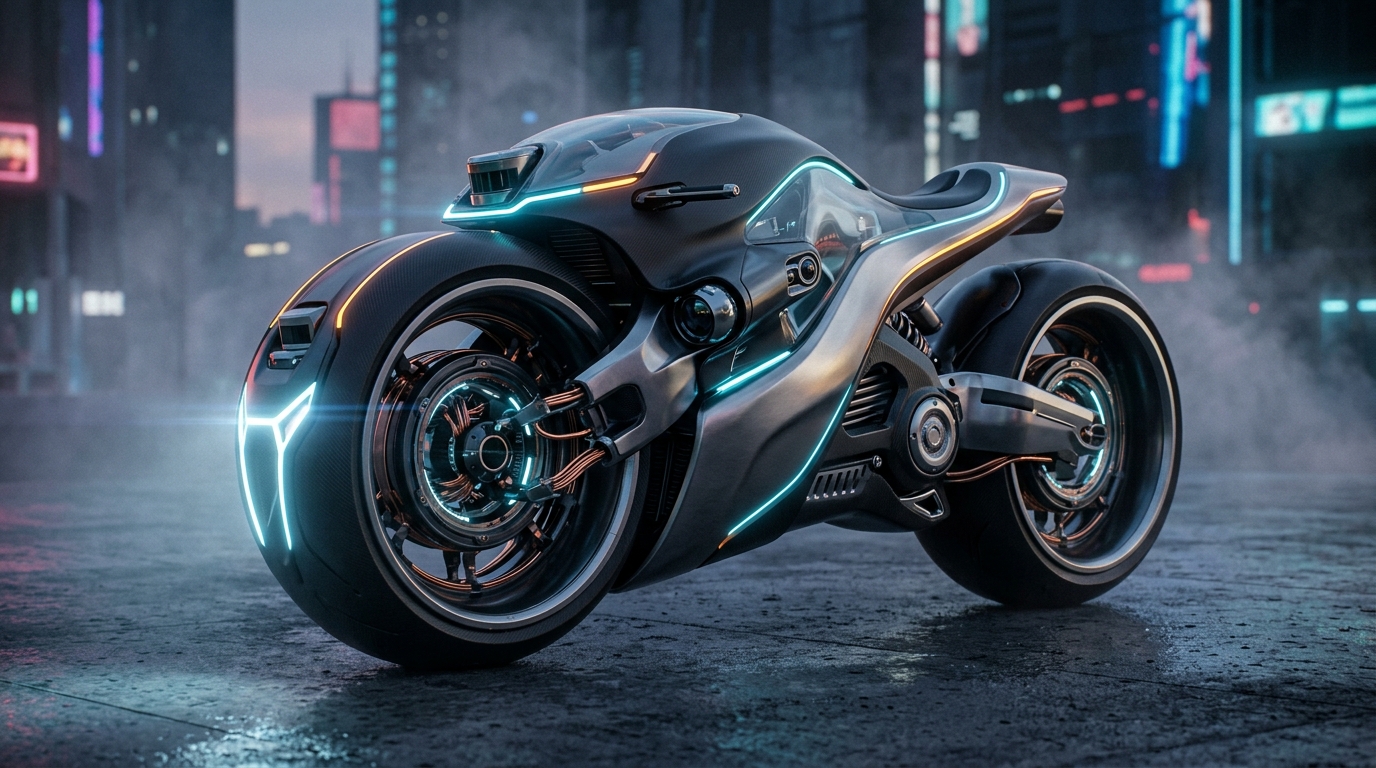
For more than a century, motorcycles have asked something very specific from their riders: balance it, control it, and accept that even a small mistake can have big consequences.
That bargain may not last forever.
Electric propulsion, fast onboard computing, compact sensors and machine vision are opening the door to something that once sounded absurd: motorcycles that can balance themselves, assist with steering and braking, and perhaps one day travel autonomously under tightly controlled conditions.
That does not mean tomorrow’s bikes will suddenly become robo-taxis on two wheels. Motorcycles are much trickier than cars. They lean, they countersteer, they are more exposed to road irregularities, and their stability depends on a constant dance between speed, geometry, traction and rider input.
That difficulty is exactly what makes the idea so interesting.
Why motorcycles are a harder autonomy problem
A car can stop and simply remain upright. A motorcycle cannot, at least not without help.
At speed, motorcycles benefit from motion and steering geometry that make them stable enough to ride. At low speed, balance becomes a real challenge. Humans handle that instinctively through small steering corrections and body movements. An autonomous system would need to reproduce enough of that control with sensors, actuators and software.
Then there is the issue of leaning. A motorcycle does not simply point the front wheel toward a corner. Lean angle, steering, braking, acceleration and available traction all interact. A self-driving motorcycle would need to coordinate them as one control problem.
This is not just an autonomous car with two fewer wheels. It is a different control problem entirely.
Pieces of the future already exist
The idea is not starting from zero. Several major motorcycle and mobility companies have already demonstrated pieces of the puzzle.
Honda Riding Assist demonstrated an experimental motorcycle that can balance itself at very low speed and while stationary by actively changing steering geometry and controlling the front wheel. Honda presented the technology as a way to reduce the low-speed instability that can make larger motorcycles intimidating.
Yamaha has explored an even stranger direction with MOTOROiD2. Yamaha describes a balance-control system that coordinates steering with movement of the motorcycle’s heavy battery mass, along with image-recognition cameras and autonomous low-speed movement. MOTOROiD2 is a research and design concept, not a production road bike, but it shows how motorcycle balance can become an active mechatronic problem rather than something left entirely to the rider.
BMW’s VISION NEXT 100 imagined self-balancing as a future assistance feature, while suppliers such as Bosch already offer motorcycle rider-assistance technologies built around radar and electronic control.
These systems are not full motorcycle autonomy. But taken together, they show that balance control, machine perception and computer-assisted riding are already moving from science fiction toward engineering.
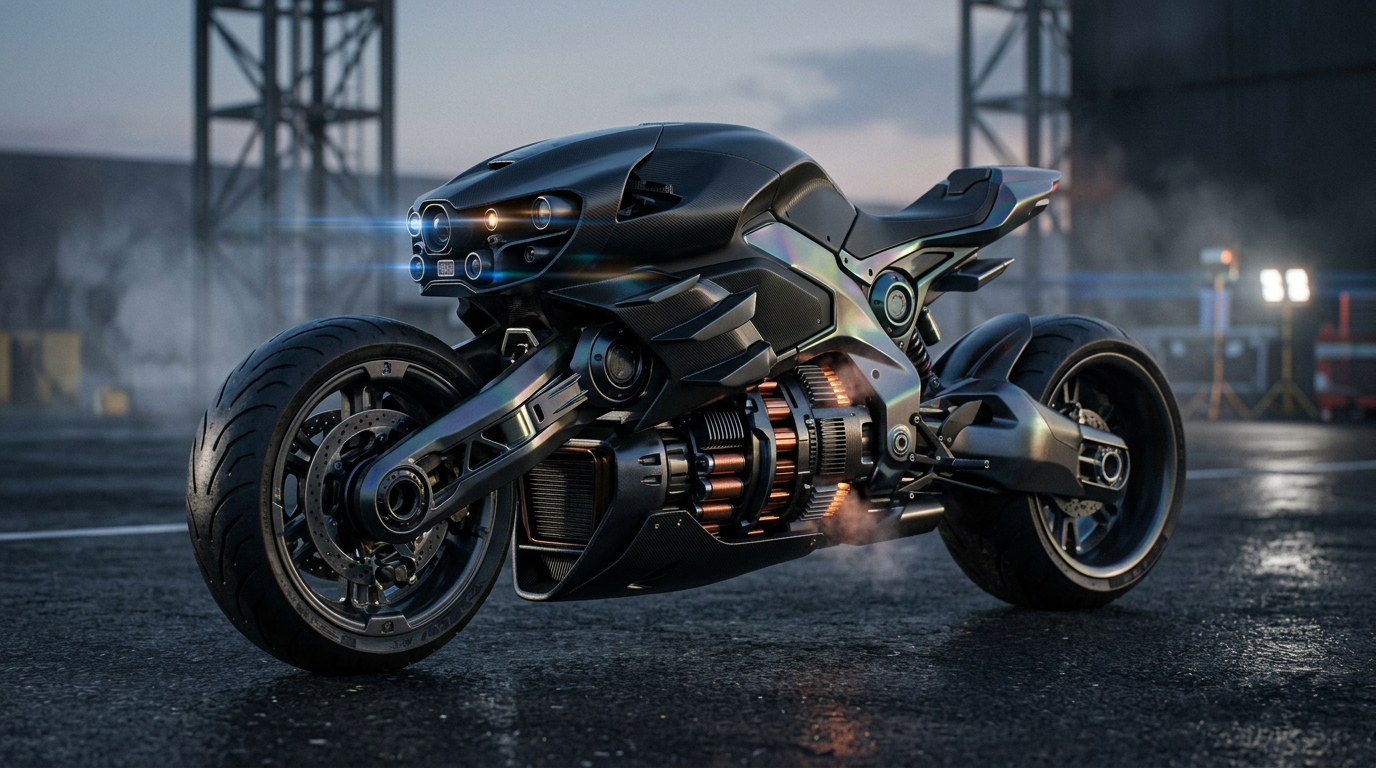
Why electric motorcycles change the equation
Electric motorcycles make some parts of the problem easier to package and control.
Motor torque can be commanded electronically with extraordinary precision. Many electric motorcycles remove clutching and multi-gear shifting from the control problem. Battery packs, motors and power electronics can also be arranged in ways that are different from a traditional engine-and-fuel-tank layout.
That flexibility matters if a motorcycle needs steering actuators, redundant computers, additional sensing, movable masses or other stability hardware. Electric drive does not make autonomy easy, but it creates a natural platform for increasingly software-defined behavior.
It also makes plausible a spectrum of functions that stop well short of full autonomy:
- low-speed self-balancing assistance
- parking and reverse assistance
- collision sensing and emergency intervention
- adaptive cruise and traffic assistance
- self-repositioning in controlled spaces
- limited follow-me or summon behavior
Self-balancing may arrive before self-driving
A truly self-driving motorcycle is a moonshot. A self-balancing motorcycle is easier to imagine.
That capability alone could change who feels comfortable riding. Imagine a commuter bike that quietly keeps itself upright below walking speed. Stoplights become less intimidating. Parking lots become easier. Heavy touring and adventure machines become less stressful for riders who are worried less about speed than about dropping 500 pounds of motorcycle at zero miles per hour.
The system could still leave normal riding to the human while stepping in during the awkward moments where balance, steering lock and momentum work against the rider.
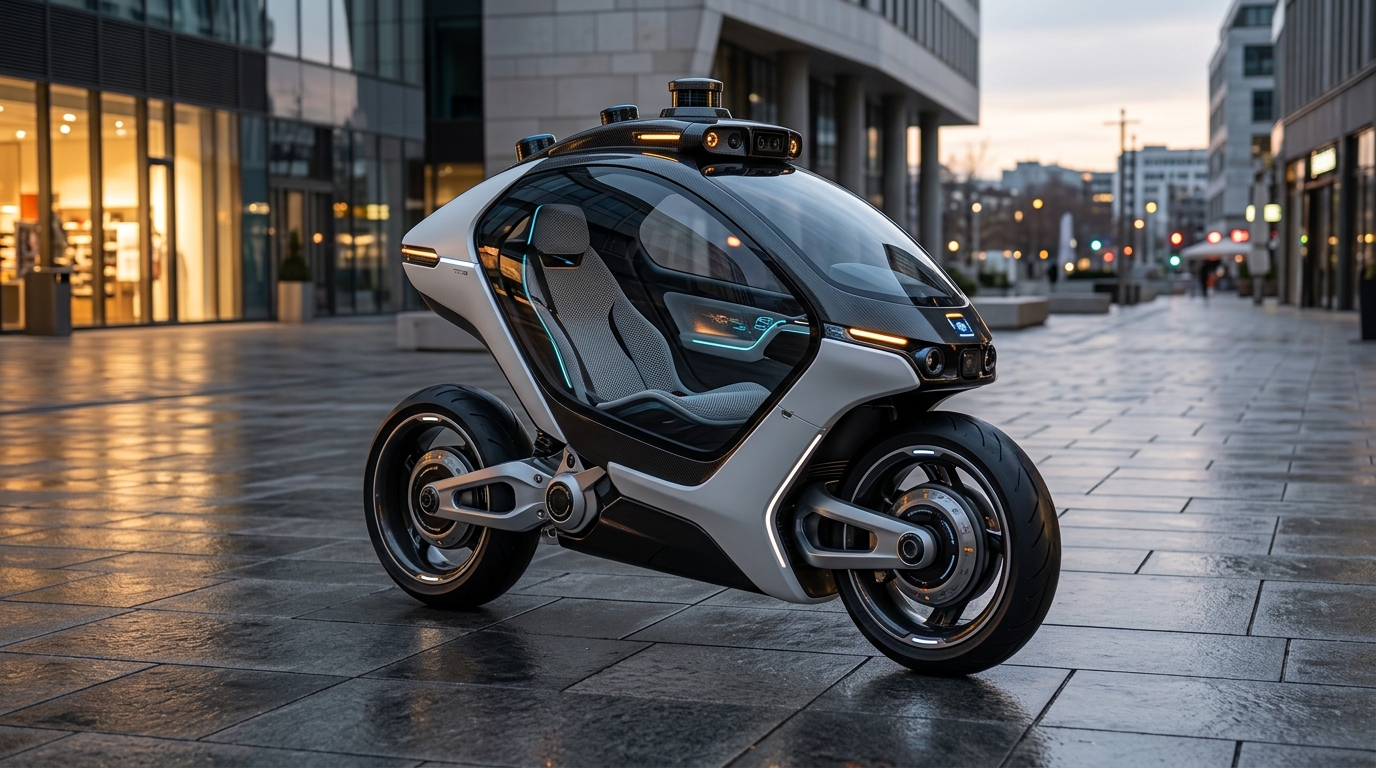
What a truly autonomous motorcycle would need
Full autonomy would require much more than a clever balance trick.
The motorcycle would need reliable perception of traffic, road edges, lane markings and obstacles. Cameras and radar are obvious candidates, with lidar potentially useful in some designs. It would also need high-rate inertial sensing to understand lean, yaw, acceleration and wheel behavior in real time.
Steering would need some form of computer actuation. Braking and motor torque would need redundant electronic control. The system would have to remain stable as speed falls toward zero and have a safe response when sensors disagree or a component fails.
And then there is the road itself. Gravel, potholes, wet paint, standing water, debris, crosswinds and road camber are not edge cases to a motorcycle. They are everyday parts of the environment.
A human rider reads many of those cues almost subconsciously. An autonomous bike would need enough awareness to make a safe decision before its tiny tire contact patches run out of options.
The design opportunities are wild
Once balance and low-speed control become active systems, motorcycle designers gain new freedom.
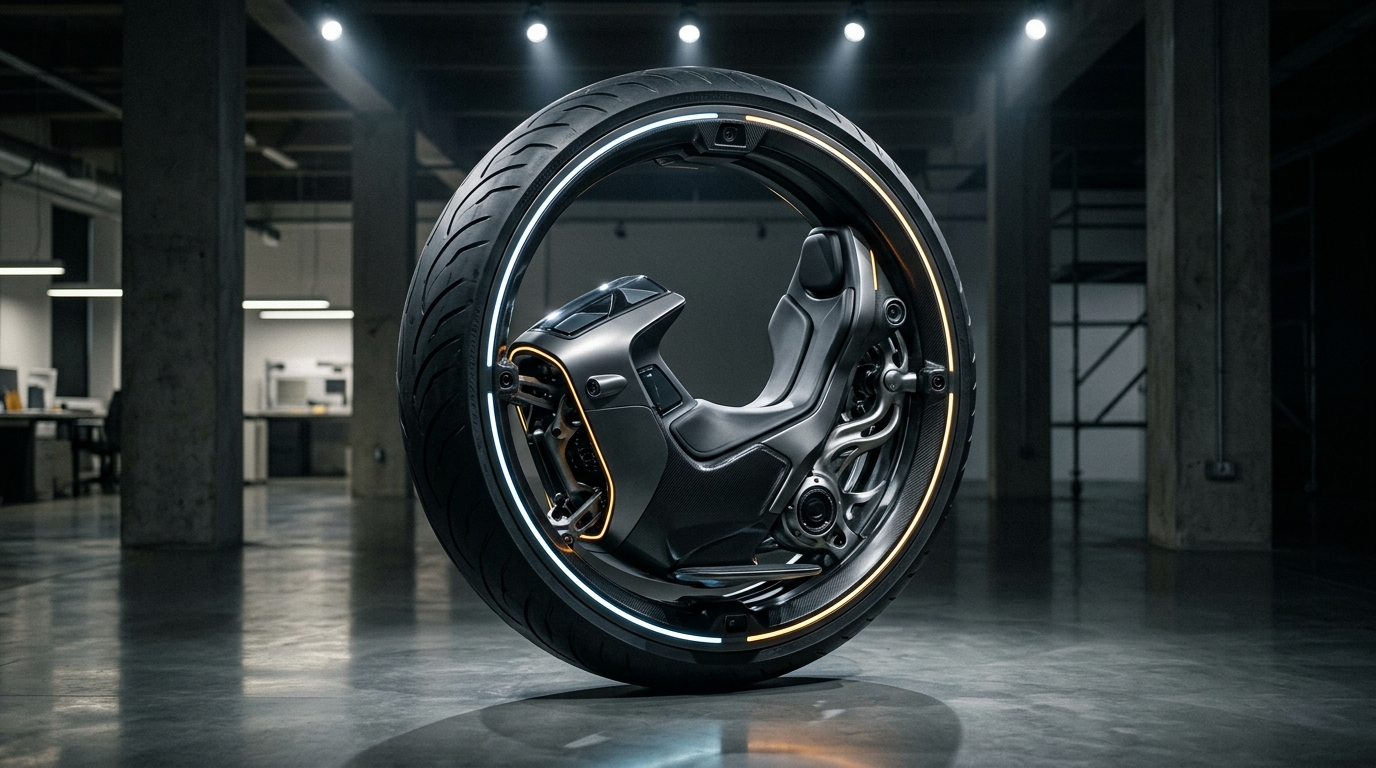
A future machine could carry its mass much lower. Battery modules might become part of an active stabilization strategy. Steering geometry could change dynamically. Small retractable supports could appear only when required. Sensors could disappear into bodywork. The rider position could be optimized more for comfort because some of the constant low-speed workload has moved to the machine.
That does not mean every future bike becomes an enclosed pod. Some would still look unmistakably like motorcycles. Others might drift toward something closer to personal robotics.
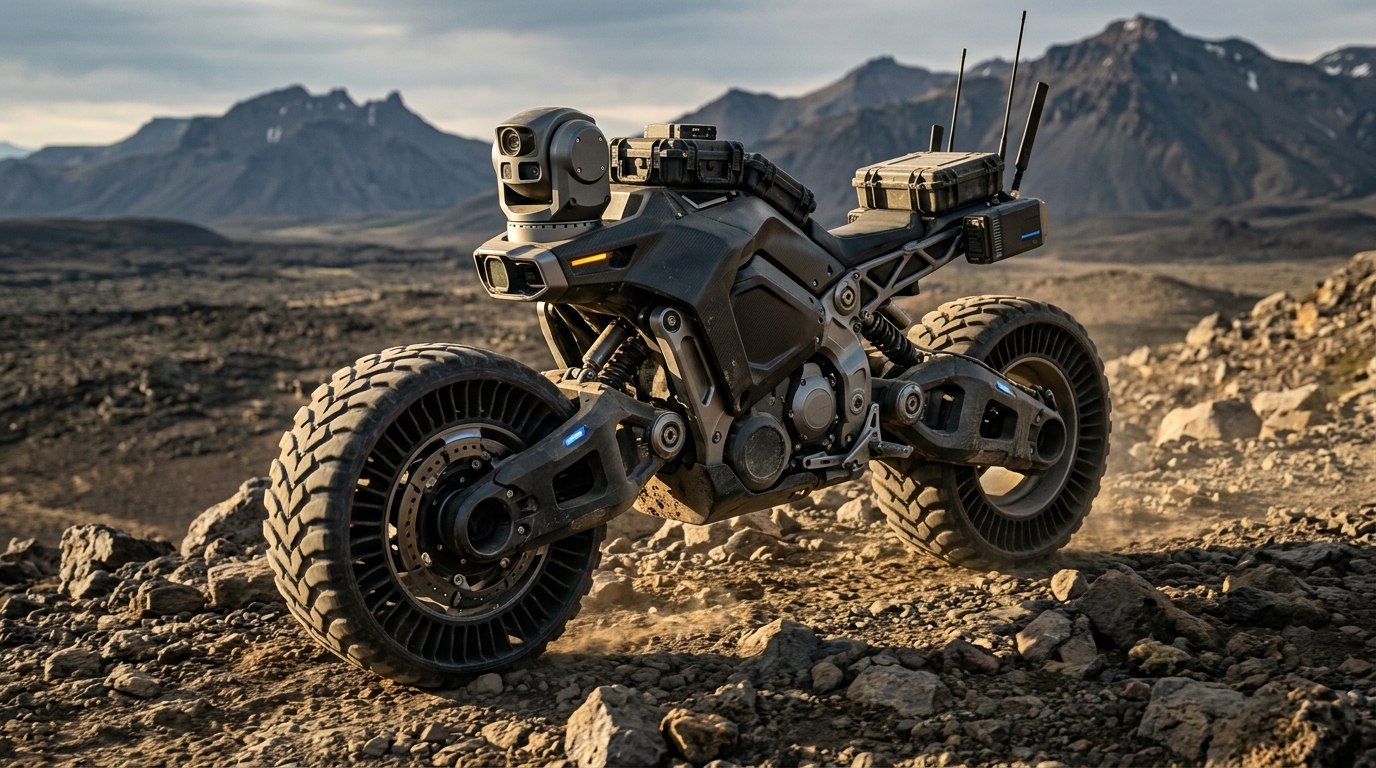
The real future may split in two
Motorcycles may eventually follow two very different branches.
One keeps the rider at the center. These machines become smarter, safer and more forgiving, but riding still means riding. Electronics help with traction, braking, perception, low-speed balance and perhaps emergency stability without trying to turn the experience into passive transportation.
The other branch could become something different: compact two-wheel mobility machines designed around automation from the beginning. They might move themselves around parking structures, reposition for shared fleets, navigate controlled campuses or transport a person who wants a narrow vehicle footprint without wanting to master traditional motorcycle control.
Whether riders would actually want a road-going autonomous motorcycle is another matter. For many people, skill and involvement are the entire point.
That may be why the most plausible near future is not a motorcycle that removes the rider. It is a motorcycle that quietly does more to keep itself upright, understand its surroundings and intervene when things go wrong.
The most interesting motorcycles of the future may not just be fast. They may be aware.